
The Challenge: A Flawless Product, Zero Digital Presence
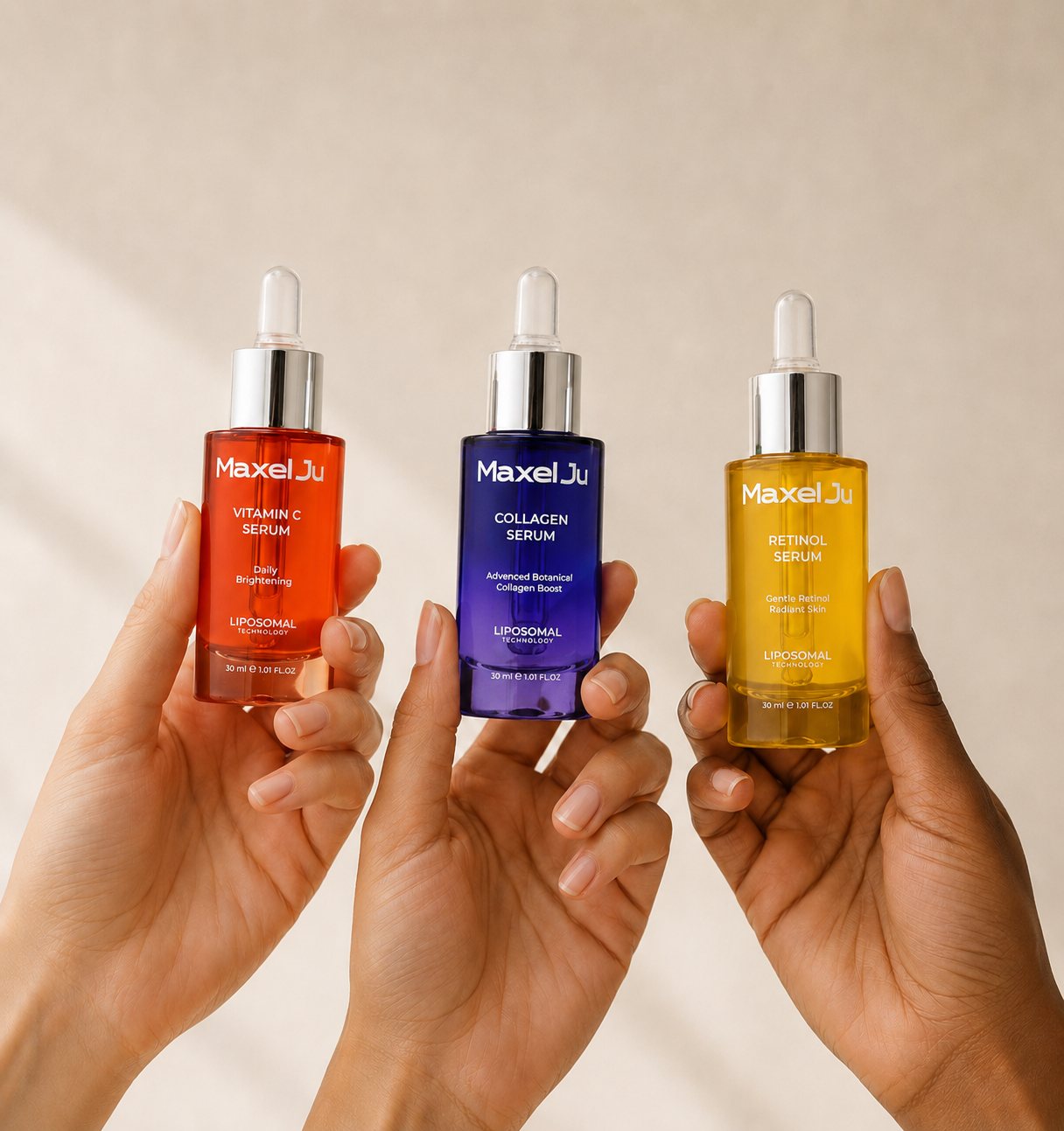
Maxel Ju is a new brand. With serums, toners and cleansers made using liposomal technology, it enters the category on the strength of its formulation quality. The product side was solid; the problem sat somewhere else entirely.
A new brand's biggest problem is not product quality — it is that nobody knows the brand exists. No storefront, no trace in search results, no voice on social media. And Maxel Ju was not aiming at Turkey alone: from the very first day, the brand planned to sell into Germany and the United Kingdom.
That doubled the job. On one side we needed a storefront that made the product's quality felt on screen; on the other, an infrastructure simple enough for a one-person team to run across three languages and three markets.

Why the easy route was the wrong one
At this point, most brands build a separate site for each language. It is easy and it is fast — and it gets expensive:
- Triple the maintenance: when one product's price changes, you have to log into three separate dashboards; sooner or later one of them gets forgotten.
- Split SEO authority: three separate domains means three weak sites competing with each other instead of feeding each other.
- Disconnected stock and orders: three separate inventory records for the same product means operations collapse at the first sign of growth.
We built the exact opposite: one store, three languages, three markets.
The Approach: One Store, Three Languages, Three Markets
1. The platform decision: Shopify
The brand's priority was selling, not wrestling with technical maintenance. We chose Shopify because it gathers multilingual setup, multi-market management and payment and shipping integrations into a single dashboard; on campaign days the platform carries the traffic load instead of the brand. The store was built lean and fast, without being bloated with unnecessary apps.
2. Language architecture: three locales, one product record
With Turkish as the primary language, English and German localizations were set up. Every product lives as a single record; the content in all three languages is a translation of that record. So when a price, a stock level or an image changes, it changes in one place and all three storefronts update at once.
On the market side, Turkey was defined as the primary market, with Germany and the United Kingdom as separate markets — each with its own currency and language pairing.
3. Geo-redirection: the right storefront for the right visitor
A visitor from Germany landing on the Turkish storefront is the fastest way to lose that visitor. We added a script to the theme that routes visitors to the right language and market based on location: visitors from Turkey land on the Turkish storefront, visitors from Germany on the German one, and everyone else on the English one.
Here is the critical detail: if a visitor changes the language by hand, we remember that preference. Someone living in Germany who wants to shop in Turkish is not thrown back to German on every page load. Never letting automatic redirection override a user's own choice is the most common mistake on multilingual sites.
4. Stripping the hard-coded language out of the theme
In multilingual projects, the real work is not translating product descriptions — that part lives in the dashboard and it is easy. The real work is the fixed strings buried inside the theme: a button that reads "Add to Cart", a label that reads "Quick View", a sentence forgotten inside a pop-up.
We tracked down roughly 25 such hard-coded strings across 22 theme files and made them language-aware: each one now renders automatically in Turkish, English or German depending on the visitor's language.
5. An end-to-end audit of the German storefront
We walked the German site page by page and cleaned out every leftover English fragment: the announcement bar, footer links, pop-ups, even image alt text. The "How do I use it?" heading on the product template became "Anwendung"; the footer's "Buy Product" was corrected to "Produkte kaufen".
These look like small details. But for a German customer, a single foreign word sends the message that this brand is not really from here — and trust is the most expensive obstacle standing between a visitor and a purchase.
6. Making the language switcher visible
In most themes, the language and region switcher sits in the footer, in a corner nobody sees. We moved ours up to the top bar as a dark pill button and made it full-width on mobile as well. When a visitor wants to change language, they do not have to go looking for it.
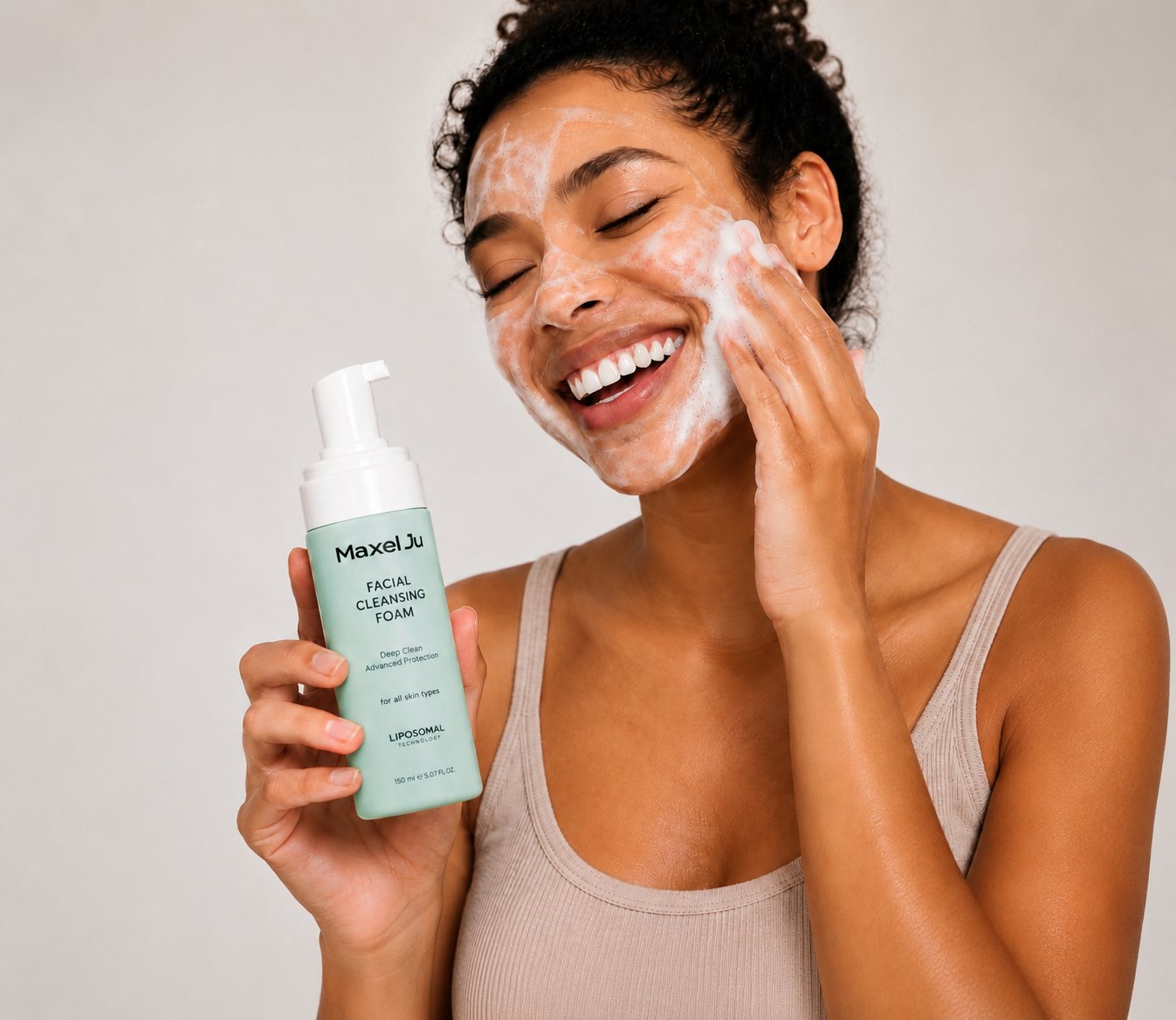
7. Instagram: the face outside the storefront
A skincare brand cannot sell its product from the shelf alone; it has to show how the product is used, who it works for, what the texture feels like. We took over management of Maxel Ju's Instagram profile: clean product-first compositions, content that explains how to use each product, and a visual language that makes the brand's liposomal technology story easy to grasp.
The profile was designed as a second storefront feeding the e-commerce one — speaking the same aesthetic language as the site, but with the closer, more narrative face that social media calls for.
8. Meta ads: first contact with the right audience
A new brand's advertising problem is different from a mature brand's: there is no conversion history yet to optimize against. So we built the Meta ads around a simple logic — find the right audience first, then scale — a structure that tests creative variations systematically and accumulates learning data.
Measurement was in place from day one: which product the ad traffic touches, what gets added to the cart and what turns into a sale are all trackable. The most common mistake new brands make is opening the ad budget before measurement is set up; in that case money gets spent but nothing gets learned.
The Outcome: What Is Live Today?
Maxel Ju is live today as an e-commerce brand in three languages and three markets, run from a single dashboard:
- A full storefront in three languages: Turkish, English and German — not just the product descriptions, the entire interface.
- Three markets: Turkey, Germany and the United Kingdom, each in its own currency.
- 22 products, 7 collections: one catalog covering everything from serums to toners, cleansers to sets.
- Smart routing: visitors land on the right storefront, and when they choose by hand, their preference is preserved.
- A social media system: an Instagram profile that establishes the brand's voice and carries the same aesthetic as the site.
- Measurable advertising: a Meta structure that shows what each creative returns and builds up data over time.
Because the brand is newly launched, performance numbers are still accumulating. We are telling this case through the system we built rather than through numbers — because a sales figure is an outcome; what produces it is the infrastructure. As the results settle, we will update this page with real data.
Four Lessons From This Case
- A brand that thinks globally is built multilingual from day one. Adding languages later is like splitting a house that is already built: possible, but expensive, and it leaves marks.
- Translation does not end at the product description. A single "Add to Cart" buried in the theme is enough to dent a foreign customer's trust.
- Automatic redirection must not override the user's preference. If the visitor picked a language, that decision outranks yours.
- For a new brand: measurement first, budget second. An ad opened before measurement is set up is spending that never learns.
What's Next?
Our work with Maxel Ju continues. The roadmap includes deepening the content on the German storefront, evaluating marketplace channels, and scaling the ad structure on top of proven creatives. As the brand grows, this case will grow with it.
Frequently Asked Questions
Should multilingual e-commerce use a separate site for each language?
No. The right approach is to build multiple languages and markets inside a single store: the product lives as one record, price and stock are managed in one place, and SEO authority accumulates on one domain. Separate sites mean triple the maintenance cost and split search authority.
Should a newly launched brand start out multilingual from day one?
If it has ambitions abroad, yes. Adding a multilingual structure later is like splitting a house that is already built: when the URL structure, translation infrastructure and market settings are set up from the start, the cost is far lower and existing SEO value is never put at risk.
Does geo-redirection hurt the user experience?
Not when it is built correctly. The critical rule is this: if a visitor changes the language by hand, that preference must be remembered and automatic redirection must never kick in again. Redirects that override a user's choice are the most common mistake on multilingual sites.
The approach we used in this case: Shopify E-Commerce. A roadmap built for you in 15 minutes.