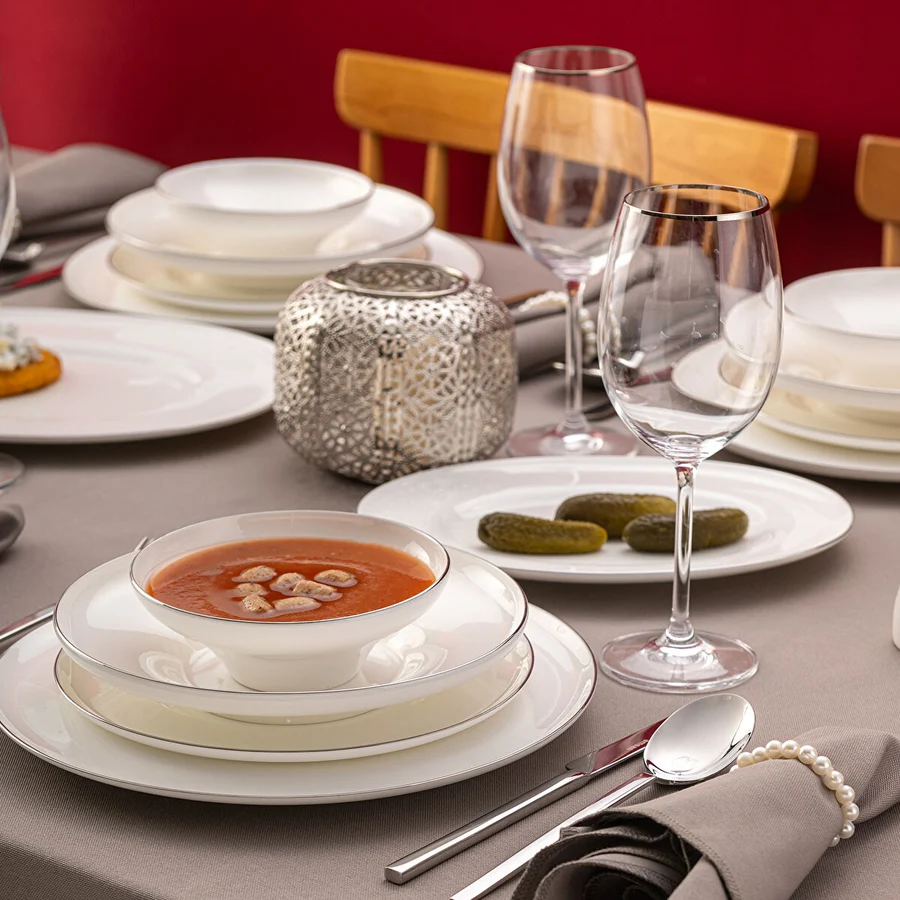
Kırmızı Mor is an Antalya-based housewares brand and an authorized Emsan dealer. It had three physical stores, a wide product range and shipping coverage across Turkey. The one thing it did not have was a working e-commerce channel: the existing site had taken a total of 3 orders in six months.
Today the same brand advertises on Google and Meta at 18X ROAS, has more than 3,000 products listed in full on Google Merchant Center, and saw its orders turn into a heavy flow by the end of the first three months.
The Starting Point: 3 Orders in Six Months
When Kırmızı Mor came to us, they had a website — but one that did not sell. It had been built on a weak content management system; products were not listed properly, search engines could not read the site correctly, and visitors could not make it as far as an order.
The number told the whole story: 3 orders in six months. This was not a picture you could explain away with "not enough ad budget" or "too little traffic". The problem sat further down.
The Diagnosis: The Problem Was Not Traffic, It Was the Infrastructure
In e-commerce, advertising sits on top of a store that works. If the store does not work, the ad budget only makes the problem more expensive.
Kırmızı Mor had two fundamental problems:
- The site infrastructure was inadequate. Product management, checkout flow and technical performance were all below the level e-commerce requires.
- Google Merchant Center had never worked. The product feed had never been set up and was rejected on every attempt — because what Merchant Center trusts is not the advertising, it is the site and the product data itself.
The currency of Google Shopping ads is product data. If the data is missing, there is no point in building campaigns.
Fix 1: We Rebuilt the Site on Shopify From Scratch
Instead of patching the existing site, we replaced it at the root. As a Shopify Partner, we built the store from zero: product architecture, category structure, product pages, cart and checkout flow, mobile experience and site speed were all designed from the ground up.
The goal was not just "a prettier site". The goal was a foundation that Google and Merchant Center could trust, and on which a visitor could actually place an order.
Fix 2: We Wrote Our Own Software to Sync 3,000+ Products in Real Time
Kırmızı Mor's catalog holds more than 3,000 products, and their prices and stock change constantly. As an authorized dealer, they have to track the master catalog.
At that scale you cannot enter products by hand. Even if you did, price and stock would drift away from reality within a week — and the moment Merchant Center sees a wrong price or stock level, it drops the product from the listing.
So instead of hunting for an off-the-shelf app, we developed our own integration software. It pulls product information, prices and stock status from the master catalog in real time and writes them into the Shopify store. The result: more than 3,000 products that are always current, with no human intervention.
This is the most critical piece of the case. Because everything that came after it — Merchant Center approval, the efficiency of the Shopping ads, 18X ROAS — was built on that data accuracy.
Fix 3: We Got Google Merchant Center Working for the First Time
With the new infrastructure and clean product data, we set up Merchant Center from scratch. The feed that had been rejected on every previous attempt went through this time with complete product information, so it was approved without a hitch and the products listed flawlessly.
Success in Merchant Center is not a numbers game, it is a matter of diligence: the right title, the right category, the right image, the right price, the right stock. Because we produce that data automatically and accurately, listing quality was high from the very start.
Fix 4: Google, Meta and Email Marketing
Once the foundation was ready, we opened up the advertising side. Google and Meta campaigns were designed together; email marketing brought repeat sales from existing customers.
The campaigns drew on the strength of the product data: the right product appeared at the right price in the right search.
The Result: 18X ROAS
By the end of three months, orders had turned into a heavy flow. Across Google and Meta ads combined, 18X ROAS was reached — meaning every ₺1 spent on advertising produced ₺18 in revenue.
| Before Smartkid | With Smartkid | |
|---|---|---|
| Orders | 3 orders in 6 months | Heavy order flow in 3 months |
| Site infrastructure | Inadequate CMS | Shopify store built from scratch |
| Product management | Manual, incomplete | 3,000+ products synced in real time |
| Merchant Center | No feed, rejected every time | Complete listing |
| Ad performance | — | 18X ROAS (Google + Meta) |
The work continues: campaign optimization, protecting feed quality and email marketing all run on an ongoing basis.
“We had a site, but it was not selling — we had taken three orders in six months. Smartkid first built the store from scratch, then wrote a system that updates more than 3,000 of our products automatically. Merchant Center had not opened for years; this was the first time it worked without a problem. Three months later, our order flow was completely different.”
Abdullah A. · Founder, Kırmızı Mor
The Lesson From This Case
E-commerce ads usually fail not because of the creative, but because of the data. If the product data is incomplete, even the best campaign structure cannot carry it; if the data is right, even a modest budget produces serious efficiency.
What we did at Kırmızı Mor comes down to this: we made the store and the data work first, and then we ran ads. When that order is reversed, money burns.
On this project we worked like a team assigned to you: designer, performance marketing specialist, developer and customer success manager, all on the same account, from start to finish.
Frequently Asked Questions
Why does Google Merchant Center reject products?
The most common reason is that the site or the product data does not meet Merchant Center's requirements: missing or inconsistent price and stock information, thin product descriptions, a site setup that cannot be verified. In Kırmızı Mor's case the feed had never worked; the source of the rejection was not the advertising side, it was the site itself. Once the infrastructure was fixed, the listings were approved without a hitch.
How do authorized dealers get a supplier catalog onto an e-commerce site?
Up to a few hundred products, manual entry is possible; with thousands of products it is not sustainable, because price and stock change constantly. The right solution is automatic catalog integration: product information, price and stock are pulled from the master catalog in real time. For Kırmızı Mor we built that integration with software we developed ourselves.
Is 18X ROAS realistic in e-commerce?
Not in every sector and not at every budget. High ROAS becomes possible in categories where the product data is flawless and the demand already exists — at Kırmızı Mor the product range and brand recognition were strong, and what was missing was the infrastructure. It is normal for ROAS to give back some ground as the ad budget grows; what lasts is the efficiency that data quality provides.
Why Shopify?
Kırmızı Mor's previous infrastructure fell short on product management, checkout flow and Merchant Center compatibility. Shopify offers a ready, reliable foundation on all three; as a Shopify Partner, we can run the setup, the theme development and the integrations from a single hand.
How long did this project take?
By the end of the first three months, orders had shifted into a heavy flow. The work continues: campaign optimization, protecting feed quality and email marketing all run on an ongoing basis.